Since the Generative AI (GenAI) revolution began in 2022, Artificial Intelligence (AI) is increasingly playing a role in the classrooms across the world. Initially, AI was mostly used as a gimmicky tool, in creating silly photos, apps that would attend your virtual classes for you and xxx. It was viewed and treated as just another tool. While GenAI is a tool, it is not merely a tool due to its ever-evolving learning capabilities. Today, students are creating their own companies, relying on agentic AI to do the work for them, and this signifies a shift from tool to ally and co-creator.
AI has been acting like an ally in the classroom for some time, at least at the best academic institutions, where they deploy and train intelligent chatbot-based tutors that elevate the learning of each individual student. And this is no longer just theory or fiction; interesting results have begun to surface, for example, from the Khan Academy School. Let's have a look at the evolving role of AI in the classroom and how AI tutors are supporting educators.
The Evolving Role of AI in the Classroom
AI has long played a role in education, through functionalities such as automating grading, providing qualitative assessments, and offering basic support to students through chatbots such as Jill Watson. But today’s AI tutors have become intelligent collaborators in the learning process. Rather than replacing teachers, they support them in ways that make their work more impactful and student-centered.
AI tutors can:
Deliver real-time feedback on assignments (both qualitative and quantitative in nature)
Tailor lessons to individual learning paths
Provide tutoring support 24/7, especially when educators are offline
Handle repetitive administrative tasks, freeing up time for creative teaching
In 2024, Khan Academy released a dataset of 188 anonymized math tutoring conversations between students and Khanmigo, showcasing the AI's ability to deliver interactive, tailored support across topics from elementary math to calculus.
A Leading Example: Khan Academy’s AI Tutor
Khan Academy's AI tutor, Khanmigo, offers a glimpse into this future. In 2024, Khan Academy released a dataset of 188 anonymized math tutoring conversations between students and Khanmigo, showcasing the AI's ability to deliver interactive, tailored support across topics from elementary math to calculus. Notably, their annual report revealed that over 221,000 students used Khanmigo during the 2023–2024 school year.
The results? Students who engaged with Khanmingo for at least 30 minutes per week experienced around 20% higher-than-expected learning gains, a compelling sign of how AI can positively impact outcomes when integrated thoughtfully.
At CanopyLAB: Building AI That Understands and Supports
At CanopyLAB, we’re equally committed to redefining how AI empowers learning. In 2024, we launched our Automated Qualitative Feedback (AQF) tool in a beta version, designed to provide nuanced, qualitative insights on student work, offering feedback that feels thoughtful, human, and actionable. It’s part of our broader mission to ensure learners receive not just fast feedback, but meaningful guidance.
Alongside AQF, we continue to evolve our AI chatbot, transforming it from a basic support agent into an educational ally. Our vision is to create AI tutors that not only assist with content but also nurture engagement, reflection, and growth—aligning closely with our adaptive learning model.
Students who engaged with Khanmingo for at least 30 minutes per week experienced around 20% higher-than-expected learning gains, a compelling sign of how AI can positively impact outcomes when integrated thoughtfully.
Enhancing, Not Replacing, Teachers
One of the biggest advantages of AI tutors is personalization. Every student learns at their own pace, and AI can adjust lessons to match individual progress. If a student struggles with a math concept, the AI tutor provides additional exercises and explanations. On the other hand, if a student moves quickly through a subject, the AI can offer advanced challenges.
This kind of adaptive learning was once a dream, but now, it's a reality. Some people worry that AI might replace teachers, but the truth is, it makes them more effective. AI tutors take on administrative tasks, track student progress, and provide support, so teachers can focus on what they do best: inspiring and mentoring students.
A teacher’s role is about much more than delivering information. They provide emotional support, critical thinking guidance, and motivation, qualities AI simply cannot replicate. Instead of taking jobs away, AI tutors are giving teachers the time and resources to be more present and impactful in the classroom.
Our vision is to create AI tutors that not only assist with content but also nurture engagement, reflection, and growth—aligning closely with our adaptive learning model.
How AI Tutors Improve Engagement
Traditional education methods often fail to capture students’ attention. AI tutors revolutionize learning by introducing interactive methods that spark curiosity and engagement, such as:
Gamified quizzes and challenges.
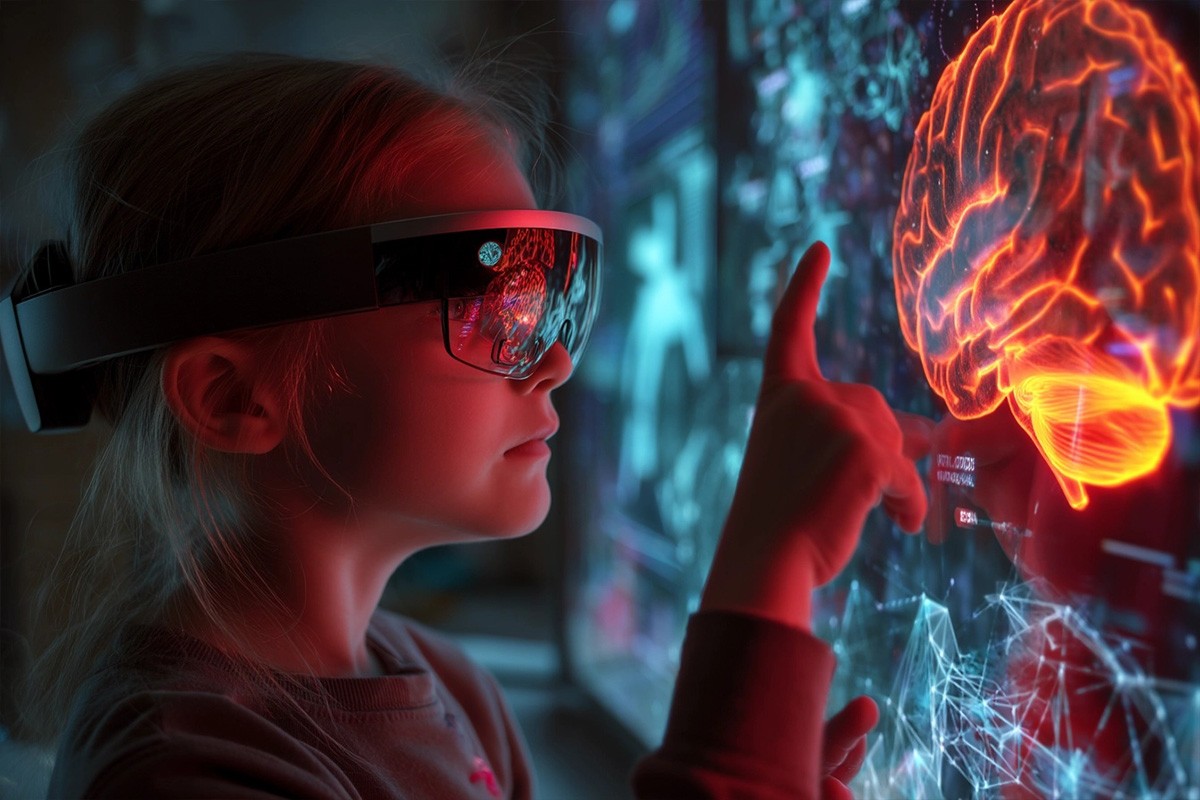
Virtual reality (VR) and augmented reality (AR) experiences.
AI-driven storytelling to make subjects more relatable.
With these tools, students become more engaged and interested in their subjects. Learning feels less like a chore and more like an adventure.
A teacher’s role is about much more than delivering information. They provide emotional support, critical thinking guidance, and motivation, qualities AI simply cannot replicate.
Delivering Better Content with Artificial Intelligence
Educational AI platforms are delivering better content for various lessons and making them interactive in nature through:
Augmenting lessons with AI-generated explanatory videos, graphics, 3D visualizations, and data charts.
Simplifying complex concepts in science, mathematics, or other subjects through AI-based simulations and interactive 3D models.
Adapting study materials and current affairs in real-time to suit different teaching and learning styles, ensuring that every student’s doubts are addressed.
By enhancing the content and making it more accessible and engaging, teachers can foster active engagement and promote enjoyable learning in the classroom.
Real-Time Feedback and Instant Help
One of the most frustrating things for students is waiting for feedback. With AI tutors, they can get instant answers to their questions. This means:
Faster corrections on assignments.
Immediate explanations for mistakes.
Continuous learning without delays.
For teachers, it means fewer repetitive questions and more time to focus on in-depth discussions and creative teaching methods.
The Future of AI in Education
As AI technology continues to advance, the future of education looks even more promising. AI tutors will continue to evolve, offering more sophisticated support and deeper learning experiences. In the future, we might see AI tutors that:
Understand students’ emotions and adapt lessons accordingly.
Use advanced simulations to teach real-world problem-solving.
Create fully immersive learning environments through VR and AR.
AI tutors are not intended to replace teachers, but rather to enhance their abilities and create more effective learning environments. By working together, AI and educators can make education more engaging, personalized, and effective than ever before.
As we move forward, the key is balance—utilizing AI as a tool while preserving the human heart of education. Because, in the end, learning is about more than just knowledge. It’s about connection, curiosity, and growth—and that’s something no AI can replace.